Custom homes across Massachusetts deserve interior details that complement their design and construction quality. From traditional Colonial homes to contemporary new builds, carefully installed trim, cabinetry, doors, and built-in features help create a polished and cohesive interior. Professional Finish Carpentry brings these elements together, turning a well-built structure into a comfortable home with thoughtful details.
Massachusetts homes also present unique challenges during construction and remodeling. Seasonal temperature changes can affect wood movement, while older properties may have uneven walls, floors, and corners that require careful fitting. True Measure Construction offers carpentry and remodeling services that emphasize precise workmanship, practical design, and quality finishing. Whether you are building a custom home or upgrading an existing property, skilled finish carpentry helps ensure that the visible details receive the attention they deserve.
What Is Finish Carpentry in Custom Homes?
Finish carpentry involves the visible woodwork and detailed installations completed toward the later stages of construction or remodeling. Unlike rough carpentry, which focuses on structural framing, finish carpentry emphasizes appearance, fit, and functionality.
Common finish carpentry features include:
- Baseboards and door casings
- Crown molding and decorative trim
- Custom cabinetry and built-in shelving
- Interior doors and hardware installation
- Stair trim, railings, and finishing details
- Wall paneling and decorative woodwork
These elements may appear small compared with major construction features, but they have a substantial influence on the finished interior. Gaps, uneven joints, misaligned trim, and poorly fitted cabinets can stand out even in an otherwise beautiful home.
Professional installation helps create consistent lines, clean transitions, and details that complement the property’s architectural style.
Why Quality Finish Carpentry Matters
Finish carpentry is about more than appearance. Properly installed features improve the usability of interior spaces, protect selected wall edges, and help built-in components function as intended.
Creating a Cohesive Interior Design
Custom homes often combine multiple materials, including hardwood flooring, painted walls, stone surfaces, metal fixtures, and cabinetry. Finish carpentry connects these elements through consistent profiles, materials, and proportions.
For example, simple flat trim may complement a modern home, while more decorative molding can suit a traditional Massachusetts property. Coordinating door casings, baseboards, cabinetry, and other details creates a unified appearance throughout the home.
The goal is not necessarily to use elaborate designs. Even simple trim can look refined when it is measured accurately, installed evenly, and finished properly.
Improving Everyday Functionality
Built-in shelves, storage cabinets, window seats, and carefully installed doors can make a home more practical.
A custom mudroom cabinet can provide organized storage for shoes, coats, and bags. Built-in shelving can use an otherwise awkward wall area, while properly fitted doors and trim create a finished transition between rooms.
When these features are planned around the homeowner’s needs, finish carpentry contributes to both the visual appeal and daily convenience of the property.
Supporting Long-Term Performance
Interior woodwork can experience wear from everyday use. Door casings, baseboards, stair components, and cabinetry are exposed to contact, movement, and occasional impacts.
Suitable materials, accurate installation, and appropriate finishing help these features withstand normal use. In Massachusetts, seasonal changes in indoor humidity and temperature can also affect wood products, so selecting suitable materials and allowing for proper installation clearances matters.
Essential Finish Carpentry Features for Custom Homes
Every home has different requirements, but several finish carpentry elements are especially important when creating a polished interior.
Crown Molding and Decorative Trim
Crown molding creates a transition between walls and ceilings, adding definition to a room. Depending on the profile and installation, it can create a traditional, contemporary, or understated appearance.
The molding should suit the room’s proportions. Oversized profiles may overwhelm a room with low ceilings, while very narrow trim may look out of place in a large space with substantial architectural details.
Professional installation requires accurate measurements, careful corner cuts, and consistent alignment. Ceiling and wall irregularities may also need to be considered so the finished molding looks even.
Baseboards and Door Casings
Baseboards cover the junction between walls and floors, while door casings frame interior openings. These features help establish the visual style of a home’s interior.
For a cohesive design, homeowners should coordinate trim profiles and sizes throughout connected rooms. A custom home may use more elaborate trim in formal areas and simpler profiles in bedrooms or utility spaces, provided the overall design remains consistent.
Proper fitting is particularly important around corners, door frames, and transitions between different flooring materials.
Custom Cabinetry and Built-In Shelving
Custom cabinetry and built-ins are useful when standard furniture or stock cabinets cannot fully meet a room’s requirements.
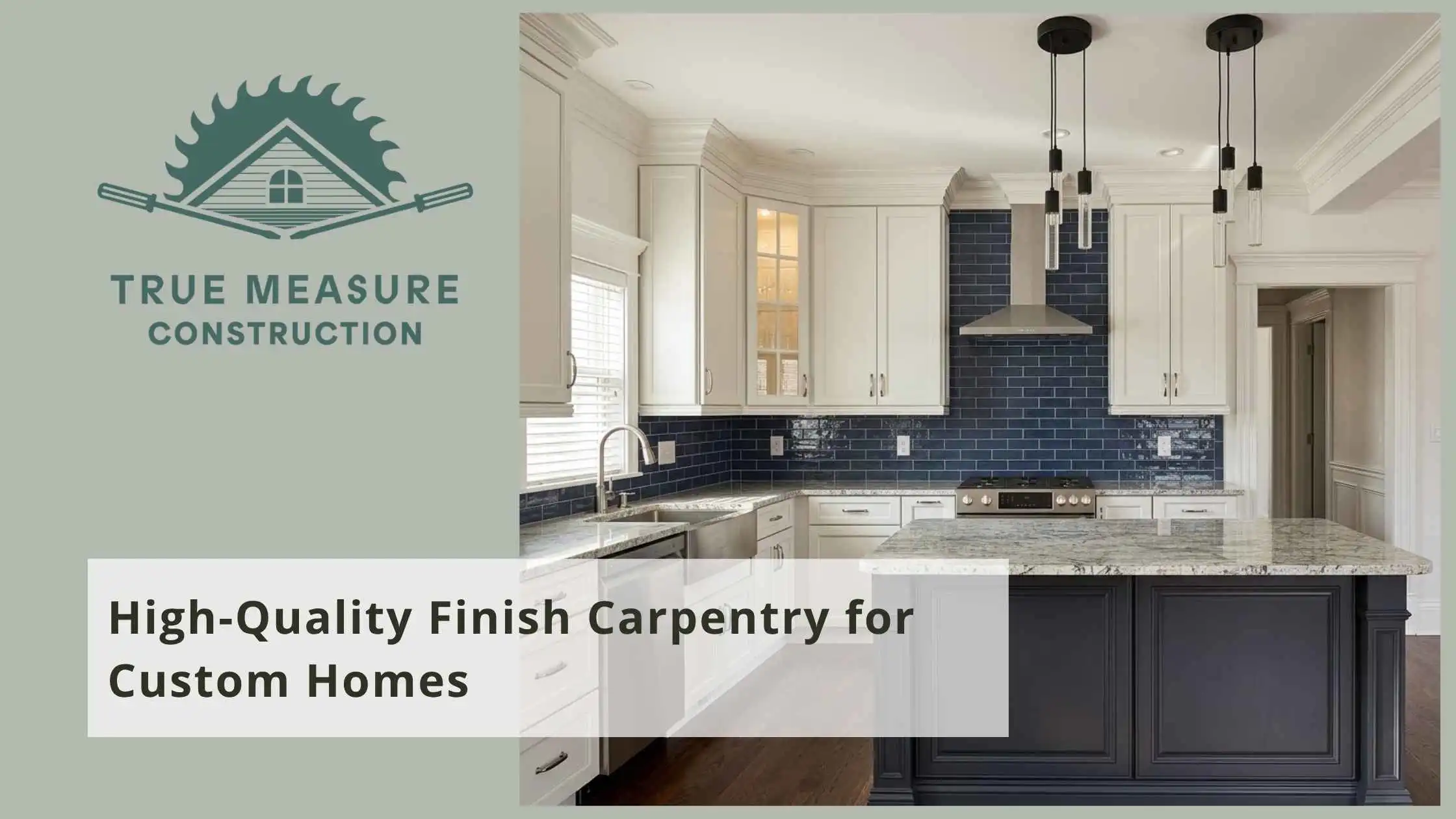
Built-in bookcases, home office storage, entertainment units, and window seats can be designed around the available space. In kitchens, carefully coordinated cabinetry and finishing details help connect storage, countertops, appliances, and decorative elements.
True Measure Construction’s kitchen remodeling service includes guidance on cabinetry, countertops, flooring, fixtures, and overall layout. Its approach considers how the space will be used, helping homeowners balance appearance with storage and everyday functionality.

Interior Doors and Hardware
Interior doors contribute to the appearance and privacy of bedrooms, bathrooms, offices, and other living areas. Proper installation helps ensure that doors align with their frames and operate smoothly.
Finish carpentry around doors includes fitting casings, aligning trim, and coordinating hardware with the overall design. Even small alignment issues can be noticeable when several doors are visible from a hallway.
Door style, casing profile, and hardware finish should work together rather than compete with other interior details.
Stair Trim and Interior Wood Details
Staircases often become focal points in custom homes. Finished stair components, railings, trim, and transitions need to be both visually consistent and properly installed.
Wood species, stain color, and trim profiles should complement nearby flooring and other interior finishes. Where stairs are part of a larger renovation, the finish carpenter must also coordinate with the existing structure and applicable safety requirements.
Choosing the Right Materials for Finish Carpentry
Material selection affects the appearance, maintenance, and performance of interior woodwork. The best choice depends on the intended application, the desired finish, the home’s design, and the project budget.
Solid Wood
Solid wood offers natural grain and can be stained or painted, depending on the species and intended appearance. It is commonly considered for decorative trim, selected cabinetry components, stair details, and other visible features.
Because wood responds to changes in moisture, proper acclimation, installation, and finishing are important. Homeowners should also understand the maintenance requirements associated with the selected wood and finish.
Engineered Wood and Composite Materials
Engineered wood and composite products can provide practical alternatives for certain trim and cabinetry applications. Their characteristics vary by product, so the material should be selected according to the intended use and manufacturer recommendations.
These materials may offer consistent dimensions or specific finishing advantages, but not every product is suitable for every location. Areas exposed to moisture or repeated impacts require particular attention to product suitability.
Paint-Grade and Stain-Grade Finishes
Paint-grade materials are designed to receive paint, while stain-grade materials are selected for an exposed wood appearance. The choice affects both material selection and preparation requirements.
Paint-grade trim can create a clean, uniform appearance alongside painted walls and cabinetry. Stain-grade wood highlights grain and natural variation, making it important to coordinate the species and stain color with flooring and furniture.

Why Professional Finish Carpentry Is Important in Massachusetts
Massachusetts properties range from historic homes with distinctive architectural details to newly built custom residences. Each type of property may require a different approach to finish carpentry.
Working With Older Homes
Older homes may have walls that are not perfectly straight, floors that slope slightly, or door openings that differ from modern standard dimensions. Installing new trim without accounting for these conditions can create visible gaps or uneven lines.
A skilled carpenter measures the actual space and adjusts the installation approach to suit the existing structure. Custom fitting may be needed around irregular corners, older door frames, and built-in features.
When renovating a historic interior, homeowners may also want trim profiles that complement the property’s original character.
Accounting for Seasonal Changes
Massachusetts experiences seasonal temperature and humidity changes that can affect wood movement. Wood components may expand or contract as indoor conditions change.
Appropriate material selection, installation methods, and finishing help accommodate these conditions. Properly planned joints and clearances can reduce the likelihood of visible gaps or other issues, although no material is completely unaffected by its environment.
Coordinating With Other Remodeling Work
Finish carpentry often takes place alongside flooring, painting, cabinetry, electrical work, and other remodeling tasks. Poor scheduling can lead to damaged trim, unfinished transitions, or repeated work.
True Measure Construction manages kitchen remodeling projects from planning through installation and finishing, coordinating licensed professionals for electrical, plumbing, and ventilation work when required. This coordinated approach can help homeowners manage the different stages of a renovation more efficiently.
The Advantage of Professional Craftsmanship Over DIY
Small trim projects may appear straightforward, but achieving consistent results requires accurate measurements, suitable tools, and experience with different materials.
A corner that is slightly out of square can create a visible gap in molding. A built-in cabinet may require careful adjustment to fit uneven walls. Door casings must align correctly, while stair details require attention to both appearance and safety.
Professional carpentry helps address these challenges before they affect the final result. Contractors can also help homeowners select materials and profiles that suit the home’s architecture and intended use.
DIY work may be suitable for simple decorative projects, but extensive custom woodwork, complex built-ins, stair components, and finish details across an entire home often benefit from professional installation.
A Practical Example: Finishing a Custom Massachusetts Home
Imagine a homeowner completing a custom home in the Worcester area. The main living space features hardwood flooring, a kitchen island, and an open connection between the kitchen and dining room.
The homeowner wants the interior to feel coordinated without making every room look identical. The finish carpentry plan includes consistent baseboards and door casings, restrained crown molding in selected rooms, and built-in shelving near the living area.
Before installation, the carpenter reviews measurements, material choices, wall conditions, and the relationship between the trim and flooring. The kitchen cabinetry and island details are coordinated with the broader remodeling plan.
This hypothetical example illustrates how thoughtful finish carpentry can bring separate design elements together. The result depends on careful planning, accurate installation, and materials selected for the home’s style and daily use.
How True Measure Construction Can Help
High-quality Finish Carpentry requires careful measurements, thoughtful material selection, and attention to every visible joint and surface. True Measure Construction provides carpentry services that include custom shelving, detailed trim work, built-in cabinetry, and other woodwork for home improvement and remodeling projects.
The company works with hardwoods, softwoods, and composite materials according to the application and homeowner preferences. Its carpentry approach emphasizes clean workmanship, reliable communication, and solutions tailored to the space.
For homeowners incorporating finish carpentry into a kitchen remodel, True Measure Construction also offers coordinated remodeling services. The team considers cabinetry, countertops, flooring, fixtures, and layout to help create a practical and cohesive finished space.
True Measure Construction serves communities across Massachusetts, including Worcester, Shrewsbury, Framingham, Northampton, Springfield, and other listed service areas. Contact the company to confirm availability for your custom home project.
Elevate Your Custom Home With Finish Carpentry
The quality of a custom home is reflected in its details. Carefully fitted baseboards, precise door casings, attractive crown molding, and functional built-ins help create interiors that feel complete and thoughtfully designed.
Professional Finish Carpentry can also improve the usability of a home by incorporating storage and woodwork that suit the way you live. The right materials, accurate measurements, and coordinated installation are essential to achieving a durable, polished result.
Ready to improve your home’s interior details? Visit True Measure Construction’s kitchen remodeling service page to explore its remodeling approach, or learn more about its carpentry services. Call 774-615-9623 to discuss your project and request a free estimate.
Frequently Asked Questions
What does finish carpentry include in a custom home?
Finish carpentry commonly includes baseboards, door casings, crown molding, custom cabinetry, built-in shelving, interior trim, and selected stair details. The exact scope depends on the home’s design and project requirements.
Why is finish carpentry important for custom homes?
Finish carpentry creates clean transitions between building elements, supports the intended interior design, and adds functional features such as built-in storage. Precise workmanship helps the finished home look cohesive.
Which materials are best for finish carpentry?
Solid wood, engineered wood, and composite materials can all be suitable for different applications. The right material depends on the intended finish, location, maintenance needs, and manufacturer’s recommendations.
Can finish carpentry improve a kitchen remodel?
Yes. Cabinet installation, decorative trim, built-in storage, and coordinated finishing details can improve both the appearance and functionality of a remodeled kitchen.
Is professional finish carpentry better than DIY?
Professional installation is particularly valuable for custom cabinetry, complex trim, stair details, and projects involving uneven walls or precise joints. Experienced carpenters can help ensure that the materials fit the space and the finished work is consistent.
How can I request finish carpentry or remodeling services from True Measure Construction?
Visit True Measure Construction’s kitchen remodeling page or its carpentry services page. You can also call 774-615-9623 to discuss your project and request an estimate.