
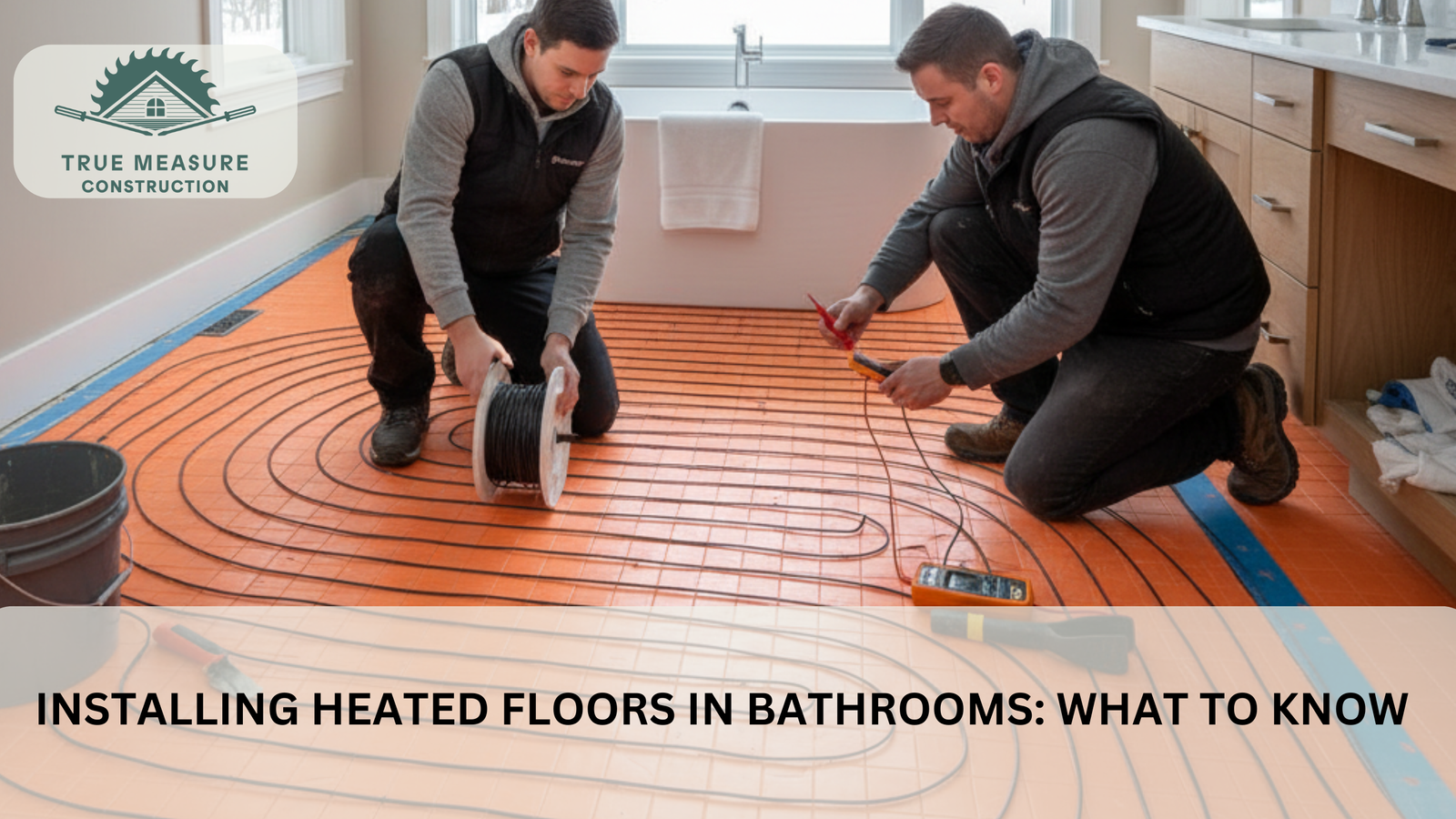
Imagine stepping out of the shower on a chilly Massachusetts morning and feeling the warmth of your bathroom floor under your feet, no more cold tiles or uncomfortable mornings. Heated bathroom floors are one of the most sought-after home upgrades in New England, offering both comfort and energy efficiency.
If you’re considering installing heated floors in your Massachusetts home or surrounding areas, understanding how the system works, what types are available, and why professional installation is key will help you make the most of your investment.
1. What Are Heated Floors?
Heated floors, also known as radiant floor heating, use a system of electric cables or hydronic (water-based) tubes installed beneath your flooring surface. The system radiates heat upward, warming both the floor and the surrounding air.
Unlike traditional heating systems that blow hot air around, radiant heat provides consistent, even warmth throughout your bathroom, eliminating cold spots and drafts.
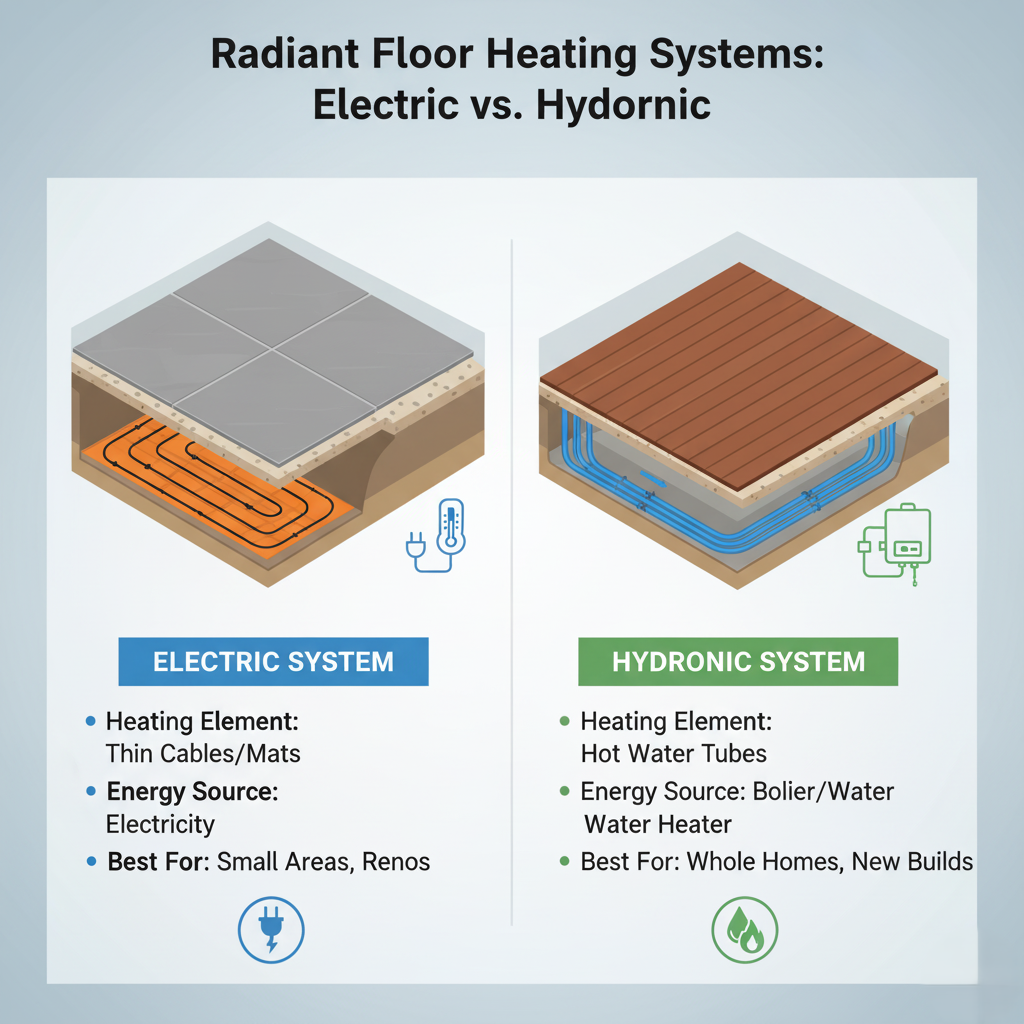
2. Types of Heated Flooring Systems
Before starting your bathroom renovation, it’s important to understand the two main types of radiant heating systems available in Massachusetts homes:
A. Electric Radiant Floor Heating
This system uses electric heating cables or mats installed directly under your tile, stone, or vinyl flooring.
- Best For: Small bathrooms or renovations.
- Advantages:
- Easier and faster to install.
- Offers zoned heating (you can warm just the bathroom).
- Lower upfront cost.
B. Hydronic (Water-Based) Heating
This system circulates warm water through flexible tubing beneath the floor.
- Best For: New construction or whole-home heating.
- Advantages:
- Energy-efficient for larger spaces.
- Can integrate with existing boilers or water heaters.
- Ideal for long-term cost savings.
3. Flooring Materials That Work Best with Heated Floors
Not all flooring types conduct heat equally well. For Massachusetts homes, where winters can be harsh, the best materials for radiant heating include:
- Ceramic or Porcelain Tile: Excellent heat conductors, perfect for bathrooms.
- Natural Stone: Retains heat longer than other materials.
- Luxury Vinyl Tile (LVT): Compatible with certain electric heating mats.
Wood or laminate flooring is less ideal for bathrooms due to moisture exposure, though engineered wood may be used in some cases.
4. Benefits of Installing Heated Floors in Massachusetts Bathrooms
Radiant floor heating isn’t just about comfort; it offers a variety of benefits that make it a smart investment for New England homeowners.
A. Comfort and Luxury
No more cold tiles or early-morning chills. Heated floors bring spa-like comfort right into your home.
B. Energy Efficiency
Radiant systems operate at lower temperatures than forced-air systems, meaning reduced energy consumption and lower heating bills.
C. Even, Consistent Heating
Instead of heating air unevenly, radiant floors distribute warmth evenly across the entire surface.
D. Better Indoor Air Quality
Unlike traditional HVAC systems, radiant heat doesn’t circulate dust or allergens, improving overall air quality perfect for households with allergies or asthma.
E. Increased Property Value
In Massachusetts’s competitive real estate market, heated bathroom floors are a premium upgrade that attracts buyers and boosts resale value.
5. The Installation Process: Why Professional Help Matters
Installing heated floors is a complex process that requires precise electrical or plumbing work, moisture protection, and careful temperature calibration. DIY installations often lead to uneven heating, system malfunctions, or even safety hazards.
Here’s what professional installation typically includes:
- Initial Assessment: Evaluating your subfloor, power source, and heating needs.
- System Design: Customizing the layout for your bathroom’s dimensions and flooring type.
- Insulation and Moisture Barriers: Essential for efficient performance and safety.
- Installation of Cables or Tubing: Done with precision to avoid damage or short-circuiting.
- Testing and Final Setup: Ensuring even heat distribution before sealing the floor.
Hiring a licensed and experienced installer ensures your heated floor system meets Massachusetts building codes and performs safely for years to come.
6. How Much Does It Cost to Install Heated Floors in Massachusetts?
Costs vary depending on the system type, bathroom size, and existing flooring. On average:
- Electric systems: $10–$20 per square foot (including materials and installation).
- Hydronic systems: $15–$25 per square foot (more for retrofits).
While the upfront cost may seem high, the long-term savings and comfort make it a worthwhile investment especially in areas like Boston, Worcester, and Springfield, where winters are cold and lengthy.
7. Maintenance and Lifespan
Once installed, heated floor systems require minimal maintenance. Electric systems can last 20–25 years, while hydronic systems can last even longer with proper care.
To maintain efficiency:
- Keep thermostats at moderate levels.
- Avoid drilling into or damaging the floor surface.
- Schedule periodic inspections if integrated with larger heating systems.

8. Local Building Codes and Permits
In Massachusetts, any heating system installation, especially those involving electrical wiring, must comply with state plumbing and electrical codes. Professional installers handle all necessary permits, inspections, and code compliance, ensuring your project is both legal and safe.
Why DIY Isn’t Recommended
While some homeowners are tempted to try installing electric mats themselves, this approach often leads to:
- Incorrect wiring or thermostat setup.
- Poor insulation reduces system efficiency.
- Costly floor repairs if the system fails.
A professional service guarantees your heated bathroom floor is efficient, safe, and built to last, without the stress or risk of doing it yourself.
Call to Action:
Transform your Massachusetts bathroom into a warm, inviting space this winter. Contact our heated floor installation experts today for a free consultation and estimate. We handle every step from design and installation to testing ensuring your radiant floor system is efficient, durable, and compliant with state regulations.